
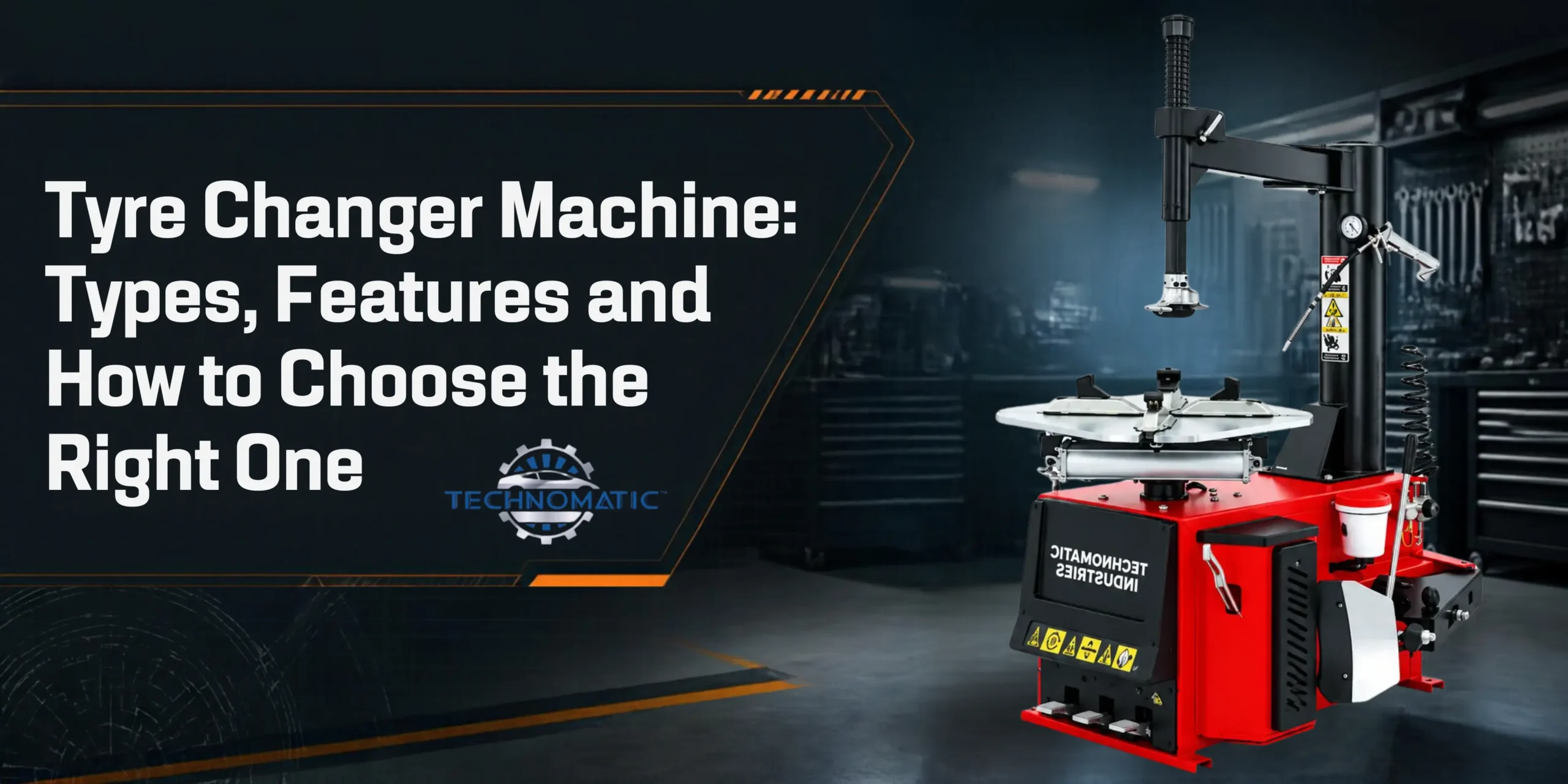
Tyre Changer Machine - Types, Features and How to Choose the Right One
If you run a garage or tyre shop, the tyre changer is probably the machine that works the hardest. It is used on almost every walk-in job, and a bad choice shows up every day as slow work, scratched rims and unhappy customers.
The trouble is that most buying advice is either a sales pitch or a wall of specs. This guide explains in plain terms how a tyre changer machine works, which type fits which workshop, and what to check before you spend your money.
What Is a Tyre Changer Machine?
A tyre changer machine removes a tyre from a wheel rim and fits a new one. It clamps the wheel on a turntable, breaks the tyre bead loose from the rim, and uses a mounting head to lift the tyre off and put it back on. Doing this by hand is slow, tiring and hard on the rim.
Quick answer: For cars and SUVs, a semi-automatic tyre changer with a rim range of about 10 to 24 inches covers most workshops. For trucks, buses and light commercial vehicles, you need a heavy-duty changer built for larger and heavier wheels.
How Tyre Changer Works
Every tyre changer, from a basic model to a heavy-duty one, has the same core parts:
- Turntable and clamps: Hold the rim firmly and rotate it. Better machines protect the rim with plastic guards on the clamps.
- Bead breaker: Pushes the tyre bead off the rim edge. Its force, measured in kilograms, matters a lot with stiff or old tyres.
- Mounting/demounting head: The tool that lifts the bead over the rim. Heads with replaceable plastic parts help prevent rim damage.
- Column or swing arm: Holds the mounting head in position.
- Pedals or controls: Operate the turntable, the clamps and the bead breaker, so the technician keeps both hands on the tyre.
- Air or hydraulic system: Powers the bead breaker and, on some models, the clamps.
Types of Tyre Changer Machines
Manual changers rely mostly on the technician’s strength. They are rare in professional workshops now.
Semi-automatic changers are the workhorses of Indian garages. The machine handles clamping, rotating and bead breaking, while the technician guides the mounting head and tyre by hand. They are affordable, simple to maintain and flexible. A good example is our TITR-1224 semi-automatic tyre changer, which uses a swing arm and a strong pneumatic bead breaker.
Tilting column and run-flat capable changers have a column that tilts back for easy access and are designed to cope with stiffer sidewalls. Our TC-940 tyre changer has a tilting column with a pneumatic lock and is listed as suitable for run-flat tyres.
Automatic (leverless) changers use a helper arm or tool to do most of the lifting, which reduces technician effort and rim risk. They cost more and suit high-end tyre shops or premium-car work.
Heavy-duty commercial changers are built for truck, bus and light commercial wheels, with hydraulic power and a much larger wheel capacity. Our TTC-800 heavy duty commercial vehicle tyre changer handles rims from 14 to 26 inches and wheels up to 1600 mm in diameter.
Specs Comparision Between TITR-1224 vs TC-940 vs TTC-800
| Specification | TITR-1224 | TC-940 | TTC-800 |
|---|---|---|---|
| Best for | Cars, SUVs | Cars, SUVs, run-flat tyres | Trucks, buses, LCVs |
| Power | 220V 50Hz, 1.5 HP | 220V 50Hz, 1.5 HP | Pump 1.5 kW, gearbox 1.8 kW (220V/380V, 3-phase) |
| Rim range | Clamp 10-24 inch | 10″-24″ | 14″-26″ |
| Max wheel diameter | 1050 mm | 1000 mm | 1600 mm |
| Max wheel width | 410 mm | Rim width 3″-16″ | 780 mm |
| Bead breaker force | 2500 kg | 2500 kg | 2500 kg |
| Noise | Under 70 dB | Under 70 dB | n/a |
| Control style | 3 pedals | Ergonomic pedal unit | 24V operation control |
| Net weight | 230 kg | n/a | 570 kg |
For very large commercial wheels, there is also the TTC-1000 PRO, which handles rims up to 56 inches and wheels up to 2500 mm in diameter. You can see the full lineup on our tyre changer machine.
How to Choose the Right Tyre Changer Machine
1. Start with the vehicles you actually service
Write down the largest wheel you handle regularly, then check both the rim diameter range and the maximum wheel diameter. A workshop that mostly services hatchbacks and sedans has very different needs from one that sees SUVs, vans and trucks.
2. Check run-flat and low-profile capability
These tyres have stiff sidewalls and cost a lot to damage. If premium or newer cars are part of your business, look for a changer designed for them, with rim guards, a tilting column and a strong bead breaker.
3. Match the power and air supply
Pneumatic models like the TITR-1224 and TC-940 need a compressed air supply (the TC-940 is rated for 0.8 to 1 MPa). If you don’t have enough air capacity, check our heavy duty garage air compressor. Heavy-duty hydraulic models use a pump motor and may need a 3-phase supply, so check your electrical connection before ordering.
4. Look at rim protection
Plastic guards on the clamps and replaceable plastic parts on the mounting head are small details that prevent expensive complaints. Alloy wheel work makes this even more important.
5. Consider space and weight
A 230 kg machine and a 570 kg machine need different floor space, delivery planning and positioning. Measure your bay before you buy.
6. Think about daily volume, not just price
A tyre changer that saves two minutes a job pays for itself faster than one that looks cheaper on the invoice. Count how many tyres you change on a busy day and choose for that, not your slowest week.
7. Ask about support
Spare parts, a service contact and a clear warranty matter more than any headline spec. A machine that is down for two weeks costs real money.
Tyre Changer Machine Price in India: What Affects It
Prices vary a lot, and there is no single number that applies to every workshop. The main factors are:
- Semi-automatic or automatic design
- Rim and wheel size range
- Bead breaker strength and build quality
- Power system (pneumatic or hydraulic, single-phase or 3-phase)
- Run-flat and alloy-wheel features
- Brand, warranty and after-sales support
The cheapest machine is rarely the cheapest to own. A weak bead breaker or poor rim protection will cost you time and complaints. For current pricing and dealer rates, get quote today
Keeping Your Tyre Changer Running Well
A few habits extend the life of any machine:
- Drain moisture and check the air filter and lubricator regularly on pneumatic models, because water in the air line shortens the life of cylinders and valves.
- Check clamps and mounting head wear. Replace worn plastic parts before they start marking rims.
- Keep the turntable and column clean and lightly lubricated as the manufacturer recommends.
- Read the warning labels and make sure every technician is trained before using it.
- Inspect hoses and fittings for leaks, since a slow leak lowers bead breaker force.
What to Set Up Alongside Your Tyre Changer
A tyre changer is one part of a tyre bay. Most workshops pair it with:
- A wheel balancer such as the WBD-1050 video graphic wheel balancer, since every new tyre should be balanced
- 3D wheel alignment equipment for the next step in tyre and suspension service
- An air impact wrench for faster wheel removal
- A vehicle lift to get the car up safely
If you service newer cars, the LAUNCH ITPMS tool is also worth a look, since many modern cars have tyre pressure sensors that need care during tyre changes.
Frequently Asked Questions
What is a tyre changer machine used for?
It removes tyres from wheel rims and fits new ones, saving time and protecting the rim compared with manual methods.
What is the difference between a semi-automatic and an automatic tyre changer?
On a semi-automatic machine, the technician guides the mounting head and tyre by hand. An automatic (leverless) machine uses a helper arm to do more of the work. Semi-automatic models are cheaper and simpler, and automatic models reduce effort and rim risk but cost more.
Which tyre changer is best for a small garage?
For cars and SUVs, a semi-automatic changer with a 10 to 24 inch rim range suits most small garages. The TITR-1224 and TC-940 both fall in this range.
Can a tyre changer handle run-flat tyres?
Only if it is designed for them. Look for a strong bead breaker, a tilting column and rim protection. The TC-940 is listed as suitable for run-flat tyres.
Does a tyre changer need an air compressor?
Pneumatic models do. The TC-940 is rated for 0.8 to 1 MPa operating pressure. Heavy-duty hydraulic models like the TTC-800 use a pump motor instead, though you’ll still need compressed air to inflate tyres.
What size tyre changer do I need?
Match the rim diameter range and maximum wheel diameter to the largest wheel you service, with a little room to spare.
Do I need a wheel balancer as well?
Yes. A newly fitted tyre should be balanced, so the two machines are normally used together.
Do you supply tyre changers to dealers and distributors?
Yes. Technomatic Industries is a manufacturer and supplier serving dealers, distributors and workshops across India. Contact us for pricing and bulk orders.
Choosing Your Tyre Changer
The right tyre changer comes down to three questions: what vehicles do you service, how many wheels do you change in a day, and what support will you get after the sale. Get those right, and the spec sheet becomes easy to read.
Looking for a tyre changer for your workshop or dealer network? Browse our tyre changer machines, call +91 9313135555, or contact our team for pricing, delivery and dealer enquiries.