Electric vehicles are becoming a regular part of Indian roads, and that change is also reaching local garages and service centres.
For workshop owners, this creates a good opportunity—but it also brings a new challenge. EVs cannot always be serviced in exactly the same way as petrol or diesel vehicles. Battery systems, high-voltage components and electronic systems require the right equipment, proper safety procedures and trained technicians.
So, if you are planning to start offering EV services, where should you begin?
The answer is not necessarily to buy every piece of equipment at once. A better approach is to understand what your workshop actually needs and build your EV service capability step by step.
Why Should Indian Workshops Prepare for EV Servicing?
EV servicing is no longer limited to large authorised service centres.
As more electric cars and other electric vehicles enter the market, independent garages and multi-brand workshops are also getting enquiries from EV owners. Customers want a nearby workshop where they can get reliable diagnostics, maintenance and repairs.
There is another important factor: customer confidence.
When someone brings an electric vehicle to a workshop, they want to know that the technicians understand high-voltage systems and have the proper equipment to work safely.
A workshop that can demonstrate professional equipment and a proper EV service process has a much better chance of earning that customer’s trust.
What Equipment Does an EV-Ready Workshop Need?
You don’t need to completely rebuild your garage overnight. Start with the equipment that will have the biggest impact on the type of EV work you plan to accept.
1. EV Battery Maintenance & Diagnostic Equipment
The battery is one of the most important components of an electric vehicle.
A suitable EV battery diagnostic system can help technicians inspect battery-related problems, identify faults and understand battery condition. Regular garage diagnostic equipment may not provide all the functions required for specialised EV battery work.
For workshops planning to take battery-related jobs, dedicated EV battery maintenance equipment should therefore be an important part of the setup.
The right equipment can make battery inspection and maintenance more organised while giving technicians better information before they begin repair work.
2. High-Voltage Safety Equipment
This is one area where workshops should never compromise.
EVs use high-voltage electrical systems, so technicians need appropriate safety equipment and a clear working procedure before carrying out electrical or battery-related work.
Depending on the job, an EV service bay may require:
- Insulated hand tools
- Voltage-rated safety gloves
- Protective equipment
- Voltage testing equipment
- Appropriate warning and isolation procedures
Equipment alone, however, isn’t enough. Technicians should also understand how to safely isolate and work around high-voltage systems.
Training and safety procedures should always come before working on a live EV system.
3. Diagnostic Scanners for EVs and Hybrids
Modern EVs rely heavily on electronic control systems.
A good diagnostic scanner can help technicians identify fault codes and understand problems across different vehicle systems. However, not every scanner provides the same level of EV and hybrid coverage.
This is why regularly updated diagnostic equipment is important.
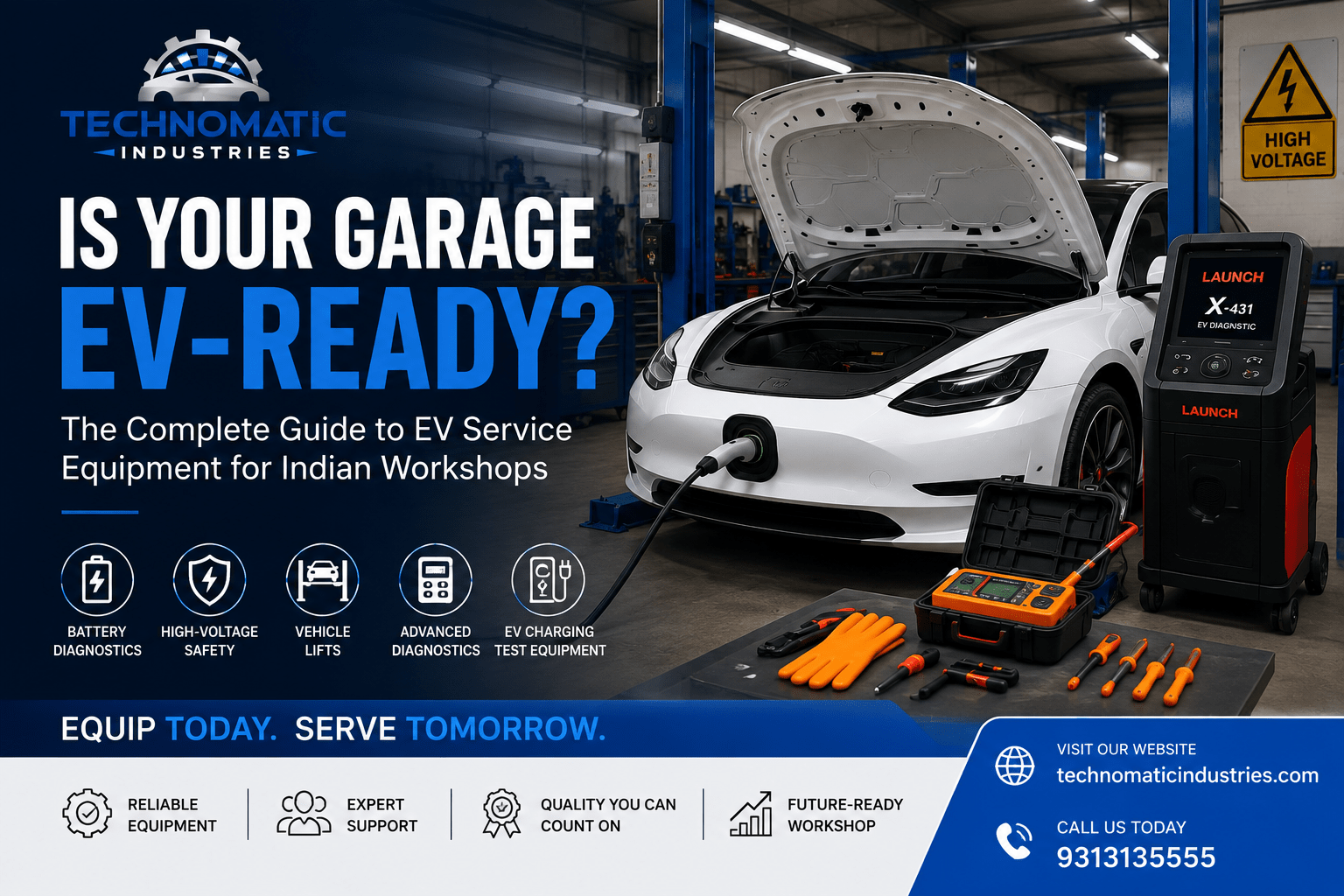
Technomatic Industries offers LAUNCH diagnostic products for workshops looking for professional diagnostic solutions and updated vehicle coverage.
For a workshop serving multiple vehicle brands, choosing a scanner with suitable EV and hybrid coverage can save considerable time during diagnosis.
4. Choose the Right Vehicle Lift
This is something workshop owners sometimes overlook when preparing for EV servicing.
Electric vehicles can have substantial battery weight positioned underneath the vehicle. Because of this, the workshop should make sure its lifting equipment is suitable for the vehicles it plans to service.
Before taking EV jobs, check the load capacity and operating specifications of your existing lift.
If you are setting up a new workshop, explore lifting equipment that matches your expected vehicle types and workshop requirements.
The goal isn’t simply to buy the biggest lift available. It is to select equipment that is properly suited to the vehicles and jobs your technicians will handle.
5. Air Compressors and General Workshop Equipment
Going electric doesn’t mean that traditional workshop jobs disappear.
EVs still require tyre servicing, brake maintenance, suspension work, wheel-related services and general inspection.
That means the rest of your workshop equipment still matters.
A dependable air compressor and reliable maintenance equipment can continue to support your day-to-day workshop operations while you add specialised EV capabilities.
Common Mistakes When Setting Up an EV Workshop
Adding EV servicing to your garage is a good opportunity, but there are a few mistakes worth avoiding.
Buying a diagnostic scanner and stopping there
An EV-ready workshop needs more than a diagnostic scanner. Safety equipment, technician training and suitable workshop equipment are equally important.
Ignoring technician training
High-voltage systems require a different approach from conventional vehicle systems. Make sure technicians understand the safety procedures relevant to the work they will perform.
Choosing unsupported diagnostic equipment
Vehicle technology changes quickly. Diagnostic software also needs regular updates to remain useful with newer models.
Before buying a scanner, check its vehicle coverage, software support and update policy.
Forgetting about lifting requirements
Don’t focus only on electronic diagnostics.
Your technicians still need to physically inspect and work on the vehicle. Make sure your lift and other workshop equipment are appropriate for the vehicles you intend to service.
EV Workshop Readiness Checklist
Before advertising EV servicing at your garage, check whether you have the basics covered:
☐ EV battery diagnostic and maintenance equipment
☐ Appropriate high-voltage safety equipment
☐ Suitable diagnostic scanner with EV/hybrid coverage
☐ Properly rated vehicle lifting equipment
☐ Trained technician for EV-related work
☐ Reliable air compressor and general workshop equipment
☐ Clear safety and isolation procedures
You don’t necessarily have to purchase everything on day one.
Many workshops can start with basic EV diagnostics and safety equipment and then expand their capabilities as demand grows.
Why Choose Technomatic Industries for EV Workshop Equipment?
Setting up an EV-ready workshop is easier when you have a supplier who understands both the equipment and the practical requirements of a working garage.
Technomatic Industries has been supplying garage equipment to the Indian automotive industry for more than two decades and is an authorised LAUNCH distributor. The company offers solutions covering EV battery equipment, diagnostics, lifting equipment, air compressors and other workshop requirements.
Instead of choosing equipment based only on price, workshop owners should look at the complete picture—product quality, suitability, installation, technical support, training and after-sales service.
If you’re planning to add EV servicing to your workshop and aren’t sure what equipment you actually need, speak with the Technomatic Industries team.
📞 Call: +91 9313135555
🌐 Website: technomaticindustries.com